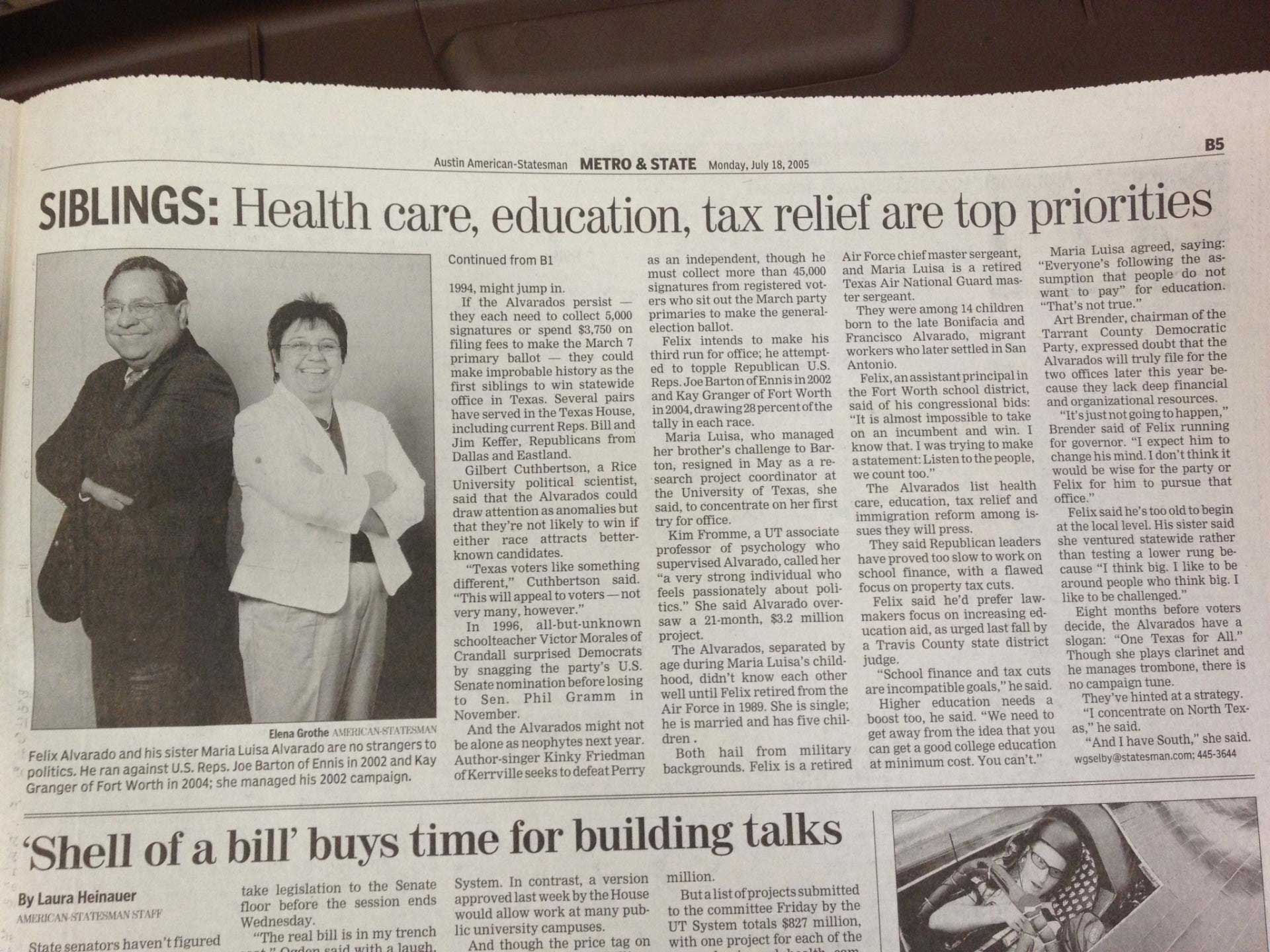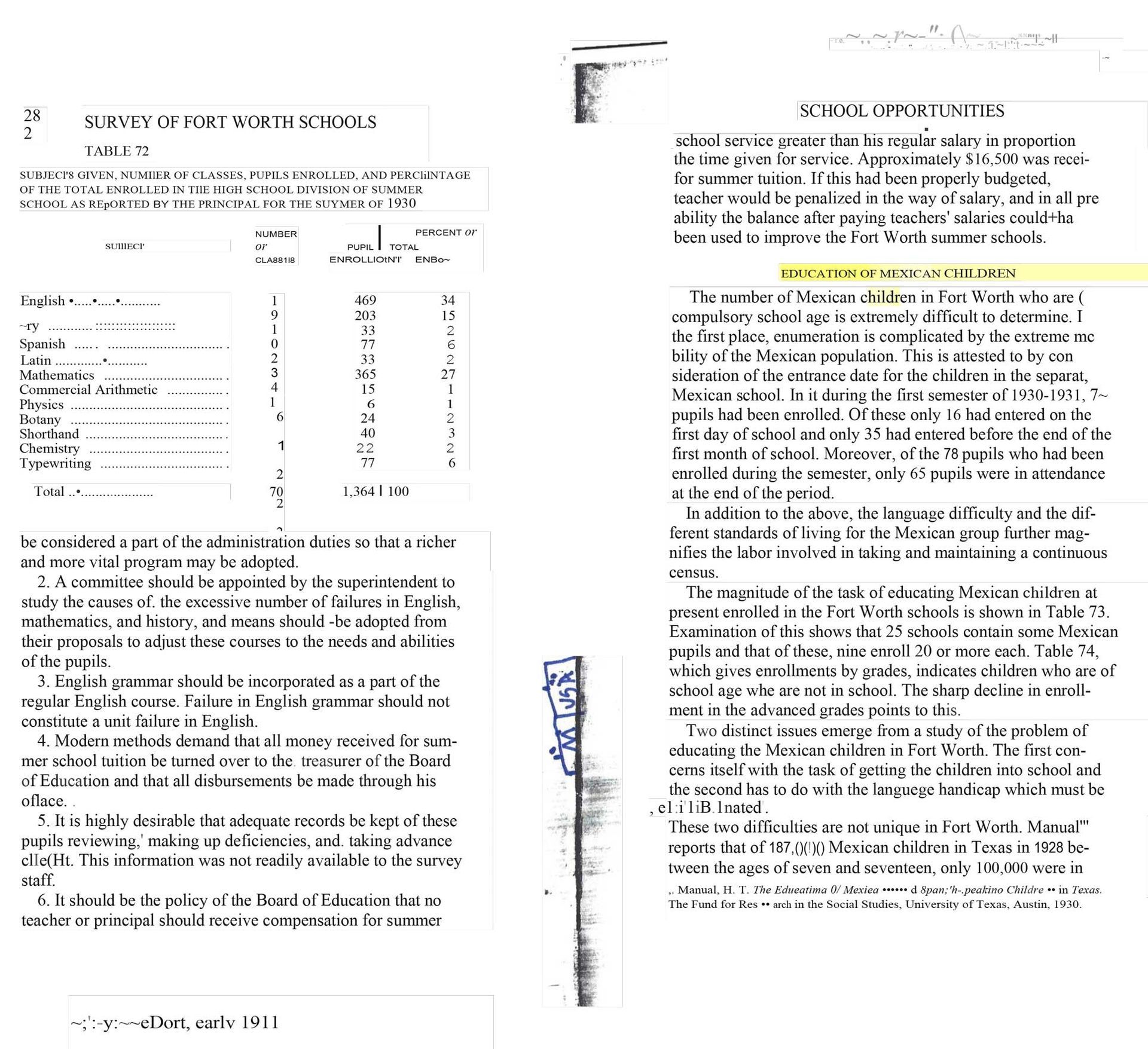
It was an incredible journey. The journey started as a six-year-old picking cotton in West Texas to the poorest school district in Texas. I visited many places around the world. I adapted to change more importantly, I was the agent of change, We lived in a transitional world, and we did not know it. We speak of change as if we knew what it was. As if we could describe it. We live around change. Change is a part of us. Change can be dramatic or it can be subtle. Sometimes we drive change sometimes change drives us. I can relate to change. In 1954 the appearance of the cotton-picking machine our lifestyle changed immediately. Out of work, we moved to San Antonio. There were not many jobs in Texas. The main industry was agriculture mostly cotton picking. Thousands were now without a job. This would have a devastating effect on future generations. With the departure of cotton our destination became San Antonio. I adapted to an urban lifestyle. In between trying to raise money to help support the family I attended school. I managed to attend school even if sporadically. I made it through the senior year. One day, I was summoned to the Dean's office. I was informed that I was being suspended from school for playing “hooky.” This is an example of cultural ignorance. The Dean did not want to hear the reason for my absences, nor did he want to know. He just me to sign the paper and take off for three days. In all my school years I had never been in trouble. I refused to sign the paper and I just walked out. This was an irrevocable act. My life would be changed forever. The Naval Reserve wanted me to finish school. I had pending scholarship offers to Saint Mary's or Trinity. I wanted to finish high school. That was not possible. A couple of days later the army recruiter came by to get me to join the Army. I told him he had 24 hours to get me into the Army. 24 hours later I was on my way to Fort Carson Co. It was a life that I was not prepared for. I could not look back. I could only look forward. Cast my fate to the wind. Life in the Army was almost the perfect storm. I still spoke with a thick Mexican accent. I was assigned to a headquarters where I was typing top secret plans. Besides being fast and accurate I was responsible for correcting spelling mistakes and grammatical errors. I was fortunate that the chief of staff was a brigadier general who would come and say good morning every day he was at the office. My accent did not seem to bother anybody. My next assignment would be to a small unit as company clerk. That assignment would come in very helpful in the latter part of the Army. My next two assignments would be as a clerk typist. At Fort Leonard Wood I decided I wanted to be an officer. There was a catch. There were too many enlisted running around wearing stripes claiming to be officers. I asked them how you can be an officer and wear stripes and they had all been Officers. but the Army called RIF (reduction in force) or, RIFFED. If you did not get promoted to Major. you would go back to being Enlisted. They had all been eliminated because they couldn't make Major. To make Major in the Army you needed two years of college, something I did not have. We discussed the criteria. The Major recommending me for OCS suggested and I agreed that I should go to half of the infantry training at Fort Benning and then transfer over to Fort Ben Harrison for personnel training so that I would be commissioned as Adjutant General. The plan it did not go well. At Fort Benning the people there did not agree. They wanted me commissioned in the Infantry Corps. I did not want to be in officer one day and enlisted the next. I resigned. The idea of being officer one day and enlisted the next did not sit well with me. That was the end of my career as an officer. My next assignment would be Vietnam. From Vietnam I went back to Germany. I thought about my situation. I needed to go back and go to college like I originally wanted to. I went to visit a friend of mine at the Army recruiting office and we talked. All this time that we are talking the Air Force recruiter was listening in on the conversation. When we finished, he told me that if I wanted to be an engineer that the Air Force could help me. All I had to do was pass the Electronics test. I passed the test and I was on my way to Keesler Air Force Base to be an electronic technician. My time in the Air Force was unlike a military service. I acquired considerable skill at fixing airplanes. If you were skilled, you had considerable latitude and power. In all my time in the Air Force nobody questioned my skill as a technician, leader or manager. My last assignment as a technician in the Air Force my squadron commander took me out of the shop and created a position for me working directly for him. According to him I was much more valuable as a manager than a technician. My last assignment was to Dyess Air Force Base. The Air Force sent me because they were having problem getting it fixing airplanes. I looked at the problem and I fixed the problem. Why is change so important. Because we Latinos are behind. And we really don't even know which way is forward. Here is a good question. Is the American dream achievable? For some “yes” for most “no.” I will explain why. I attended conferences where the topic was acculturation and assimilation. One of the presenters asked “Who spoke Spanish? Several of us raised our hand. He explained to us how that was a barrier in succeeding in a “White Anglo-Saxon Protestant Culture (WASP).” He explained in Spanish the clock walks; in WASP culture the clock runs. We value time differently. These are the forks in the road that I went through. 1. High school to Army 2. Army to Air Force 3. Air Force to schoolteacher 4. School teacher to principal 5. At the moment I am involved in a committed a couple of community endeavors Education Of all the classes that I have ever taken the most important ones that were the most valuable to me were typing and grammar. I used both all my life. I asked myself how important is the education that our children are getting? What is the purpose of our education system. Once upon a time the purpose of the educational system was to teach children the three R'Is. Is education just a way for the rich to get richer? Why do wealthy school districts get state funds to subsidize the private education of their children? Bottom line, we do not need the state of Texas to test anybody. Texas has a propensity for testing. What is the purpose of testing? I recall going back to Neely Ward elementary school where One teacher eight classes and she taught them all. From statistics this is what I remember it was not even in the book but something that the professor said the professor put it this way figures don't lie, liars’ figure. The thing is that if you want to change the outcome all you must do is change the figures. The outcome of testing is heavily influenced by parental involvement. Parental involvement is limited when a parent does not have an education. If you look at Texas South to North, you notice that there are areas, especially in the South where testing has not been successful. That can be attributed to parents who are not educated. Most of the children who were picking cotton did not get an education consequently when they grew up, they could not help their children in their education because they did not have an education. It goes that way through generations. We are entering an area which I call Communist Conservative you may recall that when we left Vietnam because the communists won the war that the first thing they did when they took over was to create “reeducation camps.” Vietnamese that had been loyal to Americans were sent to reeducation camps so that they could learn how to be a good Communist. There was no deviation from communist ideology. Texas has entered a similar error Bible will not be taught in schools. We the people are powerless against the autocratic state. The question is, will we the people recover our democratic power through elections? Two types of hate inherited and acquired Inherited Hate There is a monumental change that has affected all of us. If we look back at American History, we will run to a point where in Europe people, were fed up with the king, queen and the church. Their heart was filled with hate. A freak discovery by Columbus opened the opportunity for all these people with so much hate in their heart to migrate to an area where land was plentiful and not owned by the king. It was the chance discovery that opened the door to thousands of Europeans to find a home in the new world. The land they claimed was home to thousands of Native Americans. The land was gradually taken away from Native Americans. They were slaughtered or placed in reservations. Native Americans, Black Americans bore the brunt of the Manifest Destiny. History books have a special section on Mestizos. The conquest did not end in North America it continued around the world. America is an amalgamation of many different peoples. Acquired Hated The issue was slavery and government intervention.
Mi nombre es Maria Teresa Saldaña. Mi (yo) Tenía 16 años cuando murió mi tío, hermano de mi mama. Una ti amia fue de Fort Worth, Tx a Zacatecas de donde somos nosotros. Yo estaba en la preparatoria y mi tía me dijo que si me quería venir. Como yo estaba en la edad de la rebeldía, ya no quería estudiar y le dije a mi mama que si me dejaba irme a Estados Unidos pero ella no quería y le rogué tanto que al fin sí quiso. Mi mama hablo a mi hermana que también estaba en Fort Worth, Texas y le dijo que si podía pagar por mi yo le dijo que sí. Me vine con mi tía y un primo a la frontera de Juárez, hay nos estaba esperando el coyote que no iba a cruzar para Estados Unidos. Fue muy duro porque ese día estaba lloviendo y cuando llego la noche, nos dijeron que nos preparáramos porque ya nos iban a cruzar. De la casa donde estábamos tomamos un camión a un pueblito de la frontera. Nos tomó como una hora en llegar nos bañamos y eran como las 11:00 pm – estaba todo obscuro y mucha lluvia, empezamos a caminar y a caminar. Traíamos los zapatos llenos de lodo y ya no podíamos caminar. Íbamos a cruzar el rio bravo la corriente era muy fuerte. Los coyotes decidieron que era mejor que nos regresáramos por que no se podía hacer nada con la lluvia. Cuando íbamos de regreso los policías de Juárez nos pararon y no llevaron a una casa abandonada. L Ahí n os tenían detenidos y nos pidieron 20 dólares a cada uno. ¿Al fin nos dejaron ir. Esperamos el camión para regresar a la casa donde llegamos. Sin embargo nos llevaron a otra casa. Ya estaba casi amaneciendo. Al llegar nos dormimos. Y bañamos, y nos dieron de comer. En la noche otra vez intentamos cruzar. L No mandaron con otros coyotes. No eran los mismos. Tomamos el camión de nuevo nos dejó en otro pueblito y de ahí ya íbamos a cruzar. El muchacho que nos llevaba nos dijo que de ahí donde nos bajaron teníamos que empezar a correr porque no había nada de árboles y así nos podrán ver más la migración. Pues empezamos a correr y a correr – era mucho lo que teníamos que correr – era mucho lo que teníamos que correr. Ya no podía, mi primo me estiraba y estiraba y hasta me cargo para que no nos dejaran los coyotes y llegamos a donde estaba el rio. Mi tía no llego y el coyote nos dijo que no nos íbamos a regresar por ella que ya estaba más todos acá. Mi primo por otra parte dijo que estaba bien que la agarraran a ella y a todos nosotros pues mejor a ella, gracias a Dios como habrá llovido pues ella y otro señor con el que venía con las puras huellas llegaron al rio. En el rio había unas tablas pero tenía una tabla en medio no tenia y luego tenía otra. Pues la verdad no me acuerdo como se las que el rio. Lo pasamos por las tablas después de eso tuvimos que correr otros 15 minutos para llegar a donde nos íbamos a quedar. Llegamos era un cuartito súper chiquito ahí nos metieron a todos no tenía luz estábamos todos apretados no se veía nada y nos cobraron 80.00 dólares. Ahí nos tuvieron hasta que amaneció. Nos llevaron a El Paso Texas a un hotel y nos dejaron ahí. Descansamos y los coyotes no llevaron ropa comida nos dijeron que ellos iban a estar vigilando al aeropuerto haber si no había mucha migración porque nos iban a cruzar la segunda pasada por avión. Nos llevaron a cortar el pelo, nos compraron ropa para que los del aeropuerto no pensaran que éramos ilegales. Paso ese día y al día siguiente teníamos que estar a la 5:00 am en el aeropuerto. Ya no habrían comprado el boleto y estaba ahí una Sra. vigilándonos que no nos pusiéramos nerviosos. Paso como 1/ hora y anunciaron el vuelo. Pasamos les dimos el boleto y no nos dijeron nada. Todo salió muy bien gracias a Dios. Llegamos a Fort Worth muy bien. Mi hermana me recibió y ya me tenía trabajo en un súper mercado. L Cuando entre trabaje haciendo tortillas de harina, ahí dure como cuatro años, y después a la caja donde trabajo actualmente. Este país es puro trabajo. Yo me lo imaginaba diferente pero no es así. Aquí si no trabajas no haces nada. Por eso cuando platico con señoras me dicen que sus hijos ya no quieren estudiar, yo les dijo que no los dejen por que el estudio es lo mejor que hay en la vida. Y la mejor herencia de sus padres. Estoy muy arrepentida de no haber escuchado a mi mama. Cuando me decía que estudiara. Mis hermanos estudiaron y ellos están en Mexico ejerciendo su carrera y nosotros aquí puro trabajar para pagar deudas. Pero ahora le quiero poner muchas ganas para superarme. Nunca es tarde. Nunca.

Vote As If Your Freedom Depended On It.
As you wander across Texas. A truism about history is that it is written by the winner. And if there is no winner, we create one, because we must always have a protagonist. Take for instance Nolan County west of Fort Worth. Prior to Mexico attaining its independence, all land west of the Mississippi River was claimed by the Spanish Throne. “The land belonged to the sovereign country of Spain. If you were not a Spaniard, you needed a passport to cross west of the Mississippi River. Most of us learned of the Lewis and Clark Expedition in the 6th grade and of course, Pike’s Peak. What we did not learn was that these incursions were at the behest of the US government. Both excursions were invasions of the sovereign country of Spain. We could call them invasions of a foreign country. If you trespassed into Spanish Territory, as a minimum Spain was going to ignore the incursion as it did with the Lewis and Clark Expedition or send you to jail as it did Pike. Phillip Nolan was not so lucky. Having been warned to stay on the east side of the Mississippi, he did not. He and most of his troupe were killed in somewhere around Bosque County. Something I hear frequently is “We were here first.” Meaning we beat the Comanche, Apache, and all other Native Americans here. Heck, we even crossed the Bering Straits first. I guess we should not exaggerate. I can say that according to DNA testing, more than half of me is Native. So one-half was there first. The other half joined much later. What we can say with certainty is that once upon a time all this land belonged to indigenous peoples (meaning Apache, Comanche, et al) and then Spain laid claim to all of it. Up until 1821. Then the world came to a stop. No longer was there a Spain. In the western part of the continent there was chaos. Spain had maintained a garrison in Santa Fe to keep the Americans from crossing the Mississippi River going west. With the threat of Spanish military gone, the covered American wagons were swift to cross the Mississippi and head west looking for land silver and gold. The US won all the West without a fight. Some of you may doubt this but think, Spain held the territory since Columbus. Sure, Spain lost Florida and Louisiana but those were nothing more than political gambits. In the case of the land west of the Mississippi, it never did belong to Mexico. It was abandoned land up for grabs first come first serve when Mexico declared independence. The minute the American crossed the Mississippi, the land belonged to the US without firing a shot. Plainly, Mexico did not have the military resources to hold the huge tract of land. Yup, the Six Shooter Law prevailed, or to the victor belong the spoils. The US was more than generous by giving Mexico some money for the land, it did not have to, that is the law of the jungle. There was an immediate problem. What do you call all these people that used to be called Spaniards? Mexicans. Yup. Went from being Spaniard to being Mexican. Of course, some did not even know what Mexico was. Separation does that. Tejanos are mestizos like most of us. They were as much Mexican as Hondurans, Salvadorans. Tejanos wanted to be free from Mexico. That is why some of them joined the Texas Revolution. There were no Spaniards anymore, everyone was a Mexican. Ineptness and lack of foresight caused all the land east of the Mississippi to be lost. Folks. Santa Ana had no business in South Texas. He was in a hostile place where he was not welcome. As a general, Santa Ana was not the brightest bulb in the chandelier. He was the only bulb. That is why he was made president more than once. Instead of fighting, Santa Ana should have secured the land by placing outliers clearly visible to the Americans that there was a Mexican presence. It was a matter of perception. It is better to look strong that fight to prove you are not. So. Who was here first? Half of me. . Nolan County is named after Phillip Nolan. Phillip Nolan was a leading character in the late 1700’s history of Spanish North America. From the book, Pierre Vidal, (Noel M. Loomis and Abraham P. Nasatir) I gleaned that Nolan was a wheeler-dealer, spy, and horse thief. Phillip Nolan knew the penalty for interring Spanish Territory without a passport. When caught he was given the opportunity to surrender. He declined. He signed his own death warrant. Inscribed in this monument in Bosque County is the following comment: “Nolan’s death aroused a wave of indignation that led to the independence of Texas.” This is somewhat of a stretch since in 1801 Texas was still a part of Spain and foreigners were not allowed without the written authorization of the Spanish governor. A hero was created and given credit for something that still had not happened. It is time to revise Texas History and tell what really happened. Felix Alvarado
My First Trip to Spain by Felix Alvarado I was in Spain when it was still a medieval country. I recall my very first trip to Spain. My tour took me from Stuttgart Germ any to Paris France. I got to parish at the Gare du Nord train station. I kept looking for the train to Spain, but nobody seemed to know where it was or at least, they would not point to a certain rail where I could find the train. Finally, some gentlemen could see my predicament, and he kept saying Gare del Est scared the less he grabbed me and took me to a taxicab and put me inside the taxicab and told the cab driver to take me to Gare del Est. German and French trains were nice and clean. The luxury ended when I got to Hendaye the French Spanish border. At Hendaye we boarded Spanish train. The train looked like it had survived the Spanish civil war. It was very slow going up the mountain. My ticket was for Madrid, but we did make a stop at Avila. I told the porter that I was going to Avila, but my ticket was for Madrid. He just told me you get off the train. There was only one hotel, so I went looking for a room. I tried to register but the lady was not buying the letter that I had which authorized me to travel Europe without a passport. She escorted me to the local Guardia Civil or civil guard or police. The water should deal with not buying the store either, but they just didn't know what to do because apparently, they had never had this situation in the past, so they didn't know what to do. Finally, the Guardia Civil said I didn't have to register, so I was able to stay in Avila for that night because I was only passing through. The hotel room only had a bed there was no light and there was no running water, no heat and if you wanted to use a bathroom you had to go outside because there was a squat type of commode and that was it. Morning, I went looking for a taxi to take me to the small town that I was going to Navalmoral de la Sierra. The driver said that he was going to take me through the short way. He was told by the other taxicab drivers to take the long way because the mountain pass was very treacherous. The driver ignored the other cab drivers and took road through the mountain pass. We made it to the mountain path. We skidded all the way down until we ran into a boulder and that was the end of a taxicab ride. Someone that was passing by gave us a ride back to Avila. When we got back there were plenty of taxicab drivers that wanted to take me to Navalmoral, but they all wanted to go around the mountains. The long way was through San Martin de Valdeiglesias. Along the way I got a glimpse of the toros de guisando. I made a mental note to return some day. I made it to Navalmoral. There was a bar at the intersection. I went looking for directions. I was going meet my future wife. I found the home of my future wife who greeted me with “what are you doing here you jerk.” My reply was “I am here to see your father to ask him if I can marry you.” Navalmoral was a quaint town still in the Middle Ages. There were no modern conveniences. There was no electricity, running water, or newspaper. The water fountain at the center of town square was the sole source of water the water the town. The town was literally isolated from the rest of the world. The only source of information was the back-and-forth buses that went to Avila and Madrid. Every morning there was a frenzy of activity before the buses arrived. While waiting for the buses, people were busy passing on information that they wanted the traveler to check. There was a frenzy of activity just before the rush returned. Of course, the chatter started immediately when the doors to the bus opened. There was nonstop chatter of the waiting for the bus. There was none such chatter all the way back home. These people were hungry for information. The bus was the source of information. When it was time for me to return, I went to Avila, got a ticket and went to board the train. I was coming back to Germany at the same time as Spanish workers were returning to Germany after their Christmas vacation. The train was so full that the door to the car closed behind me. I had to get off at Salamanca because people were getting off. I couldn't get in the car when I went to get back into the train, I found out that there was no space in the train. All the space was taken. Eventually a caboose was attached. I reached the caboose too late. It was already full. I could only get in standing up. The Spaniards took out their bread sausage, cheese and wine and started sharing. They shared with me. When I had to use the toilet, people were using it to store their baggage. A Spaniard could read my mind he said you are outside right now, aren't you? That is your toilet.” I went outside the caboose until I got to the French border. I transferred over to a French train, and I went to first class. I wanted comfort. the Porter came back they asked me for my ticket. I gladly paid the difference between first and second class. When I got back to Paris, I knew now that I had to transfer stations.